

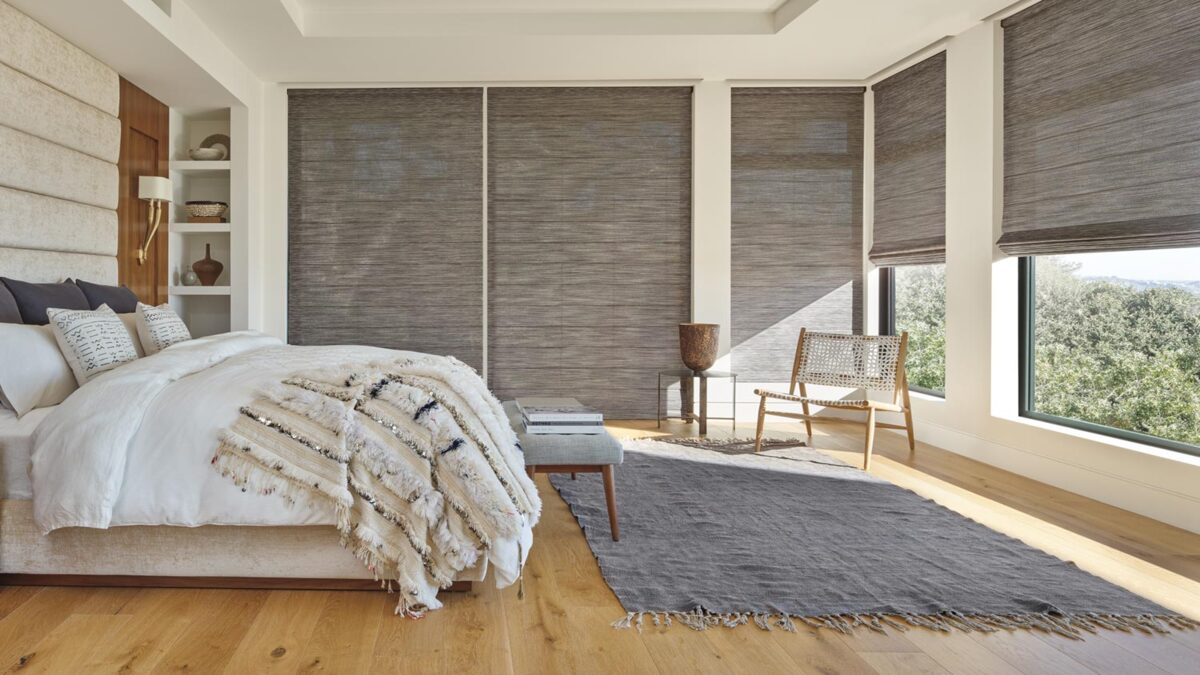
Roman shades sit at the intersection of softness and structure. They offer the warmth of fabric with the clean functionality of a shade, which is exactly why designers reach for them again and again.
But not all roman shades work in all rooms.
Choosing the right one depends on light exposure, privacy needs, architecture, and overall design direction. When selected thoughtfully, they elevate a space. When chosen quickly, they can feel purely functional, or even fail at that.
Here’s how to choose the right roman shade for every room in your home.
Step 1: Understand the Room’s Primary Function
Before selecting fabric or color, ask one simple question: how does this room live?
- A bedroom needs privacy and darkness.
- A living room needs flexibility.
- A kitchen needs durability.
- A bathroom needs moisture resistance.
The right roman shade supports the way the room is used, not just how it looks.
Step 2: Choose the Right Opacity
Opacity determines how much light enters the space and how much privacy you maintain.
Light-filtering fabrics soften sunlight while preserving brightness. These are ideal for living rooms, dining rooms, and kitchens where natural light is welcome.
Blackout-lined shades are best for bedrooms and nurseries, especially in homes with early morning sun exposure.
Sheer fabrics offer the most subtle light control. In spaces where privacy is minimal concern but softness is desired, sheer roman shades gently diffuse light while maintaining an airy feel. They’re particularly effective in layered window treatments, where a secondary drapery layer can provide additional coverage when needed. The key is matching opacity to lifestyle.
Step 3: Select the Right Fabric Weight
Fabric weight affects both structure and mood.
Lightweight fabrics create softer folds and a more relaxed appearance. Linen blends and airy cottons feel casual and effortless, perfect for transitional or coastal-inspired interiors.
Midweight fabrics hold their shape well and offer a balanced, tailored look.
Heavier fabrics produce more defined folds and a structured silhouette. These are ideal for formal dining rooms, offices, or traditional spaces that benefit from architectural presence.
The heavier the fabric, the more structured the final look.
Step 4: Decide on Fold Style
Not all roman shades fold the same way, and the style dramatically changes the aesthetic.
Flat roman shades offer a streamlined look and showcase fabric patterns beautifully. They work well in modern and transitional interiors.
Soft fold (hobbled) styles create cascading folds even when lowered, adding movement and elegance to traditional spaces.
Relaxed roman shades have a slight curve at the bottom hem, giving a softer, more casual finish.
Choose the fold style based on the overall tone of the room — structured for tailored spaces, relaxed for casual ones.
Step 5: Coordinate Color Intentionally
Color should feel connected to the broader palette of the room.
Neutral shades create flexibility and longevity. In homes with cooler undertones, beige or gray window roman shades provide cohesion without overpowering surrounding furnishings. They add subtle depth while maintaining versatility.
If the room already contains bold furniture or statement art, keep the shade quiet.
If the space feels neutral or understated, consider introducing pattern or texture through fabric. Subtle stripes can elongate windows. Small-scale prints add charm without visual clutter.
Always pay attention to undertones. Warm tones pair best with warm neutrals. Cool palettes benefit from crisp whites, grays, and blue-based hues.
Step 6: Consider Mounting Style
Mounting affects both aesthetics and perceived window size. So, consider outside vs inside mounting styles for roman shades before you start off.
Inside mount shades sit within the window frame. They feel tailored, built-in, and architectural. This works best when trim details are worth showcasing.
Outside mount shades extend beyond the frame, often making windows appear larger and concealing uneven edges. They’re especially helpful for small or awkwardly proportioned windows.
Measure carefully. Precision is what separates designer-looking shades from DIY attempts.
Step 7: Match the Shade to the Room
Each room has unique needs.
Living Rooms
Opt for light-filtering fabrics that balance brightness with privacy. If the space opens to other areas, keep tones cohesive.
Bedrooms
Prioritize blackout lining and softness. Texture enhances comfort, especially in primary suites.
Kitchens
Choose washable or performance fabrics. Simplicity works best here.
Dining Rooms
Structured silhouettes elevate formal spaces. In entertaining areas, custom roman shades ensure crisp folds and a precise fit that enhances architectural details.
Bathrooms
Use moisture-resistant materials and lighter colors to maintain brightness.
The shade should support the room’s function while enhancing its personality.
Step 8: Decide Whether to Layer
Roman shades are strong enough to stand alone, but layering can elevate the look.
Pairing a tailored shade with drapery panels adds dimension and insulation. In formal spaces, combining roman shades with full-length curtains introduces softness and architectural framing.
Layering works especially well in bedrooms and living rooms, where flexibility in light control is valuable.
The shade manages light. The panels define the space.
Step 9: Maintain Consistency Across the Home
Consistency doesn’t mean uniformity.
You don’t need identical fabric in every room — but there should be cohesion. Perhaps the fold style remains consistent while fabrics vary. Or the color family stays similar, shifting slightly based on function.
In open-concept homes, coordination is particularly important. Harmonized shades prevent visual fragmentation and create flow from one space to the next.
Thoughtful repetition feels intentional. Random variation feels accidental.
Why Designers Prefer Roman Shades
Roman shades offer:
- Clean lines
- Fabric warmth
- Customizable opacity
- Architectural polish
- Versatility across design styles
They bridge the gap between soft furnishings and structured window treatments, which makes them one of the most adaptable options available.
When chosen carefully, they don’t just cover a window. They refine it.
Bringing It All Together
Selecting the right roman shade is about balance.
Balance between light and privacy.
Balance between softness and structure.
Balance between design and function.
Start with how the room is used. Choose opacity accordingly. Select fabric weight and fold style to match the aesthetic. Mount with intention. Coordinate color thoughtfully.
When every decision supports both lifestyle and design, the result feels effortless and unmistakably tailored.
